Portfolio
PAGANISM
I'm a title. Click here to add your own text and edit me.
I'm a title. Click here to add your own text and edit me.
PAGANISM
Client
Client
Medical Expo
Medical Expo
I'm a paragraph. Click here to add your own text and edit me. It’s easy. Just click “Edit Text” or double click me to add your own content and make changes to the font. I’m a great place for you to tell a story and let your users know a little more about you.
I'm a paragraph. Click here to add your own text and edit me. It’s easy. Just click “Edit Text” or double click me to add your own content and make changes to the font. I’m a great place for you to tell a story and let your users know a little more about you.
Client
Medical Expo
I'm a title. Click here to add your own text and edit me.
I'm a paragraph. Click here to add your own text and edit me. It’s easy. Just click “Edit Text” or double click me to add your own content and make changes to the font. I’m a great place for you to tell a story and let your users know a little more about you.
VLearn
Exploring UX in VR

Project Overview
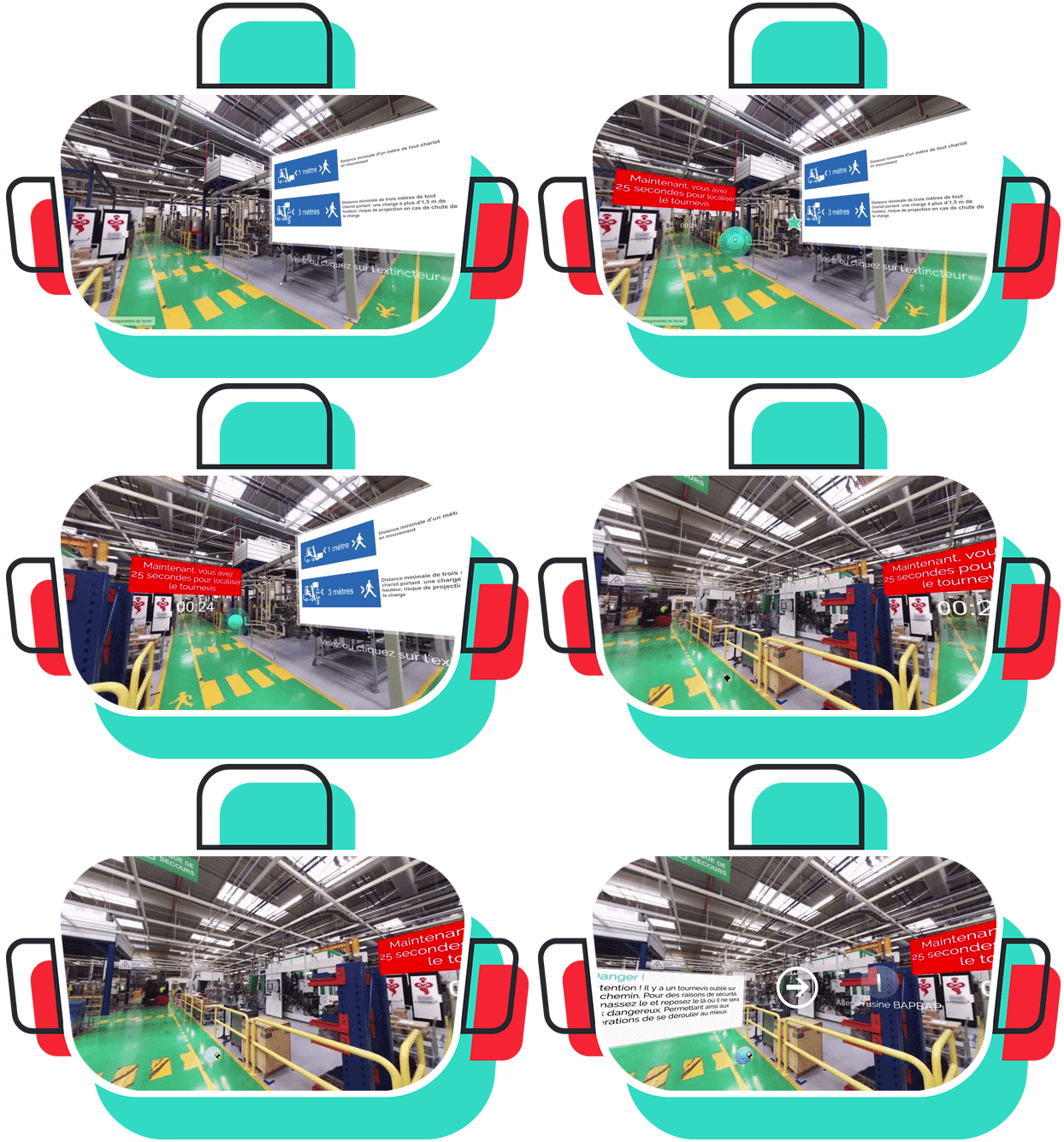
Designing immersive VR training to standardize SOP learning and competency evaluation for global semiconductor manufacturing teams.
Built on the Uptale platform, the solution combines hands-on virtual simulations with interactive assessments to validate procedural knowledge.
By removing physical training constraints, it enables scalable, consistent, and engaging learning across global factory locations.


Empowering Innovation through Technology
This project was delivered through a collaboration between multiple partners, each contributing to different aspects of the solution.
UX & Design
Provided UX design support, focusing on designing immersive learning experiences using the Uptale platform.
Hardware & Technology
Supplied VR headsets and provided technical support to enable reliable and scalable immersive training experiences.
VR Platform
Provided the VR authoring and distribution platform used to build, deploy, and manage interactive training modules.

Client & Project Sponsor
The organization where the solution was implemented, defining SOPs, training goals, and real-world manufacturing requirements.

Project Impact
1.3x
Faster training
Safe, Risk-Free Learning
87%
Cost Reduction
Standardized SOP Globally
My Process
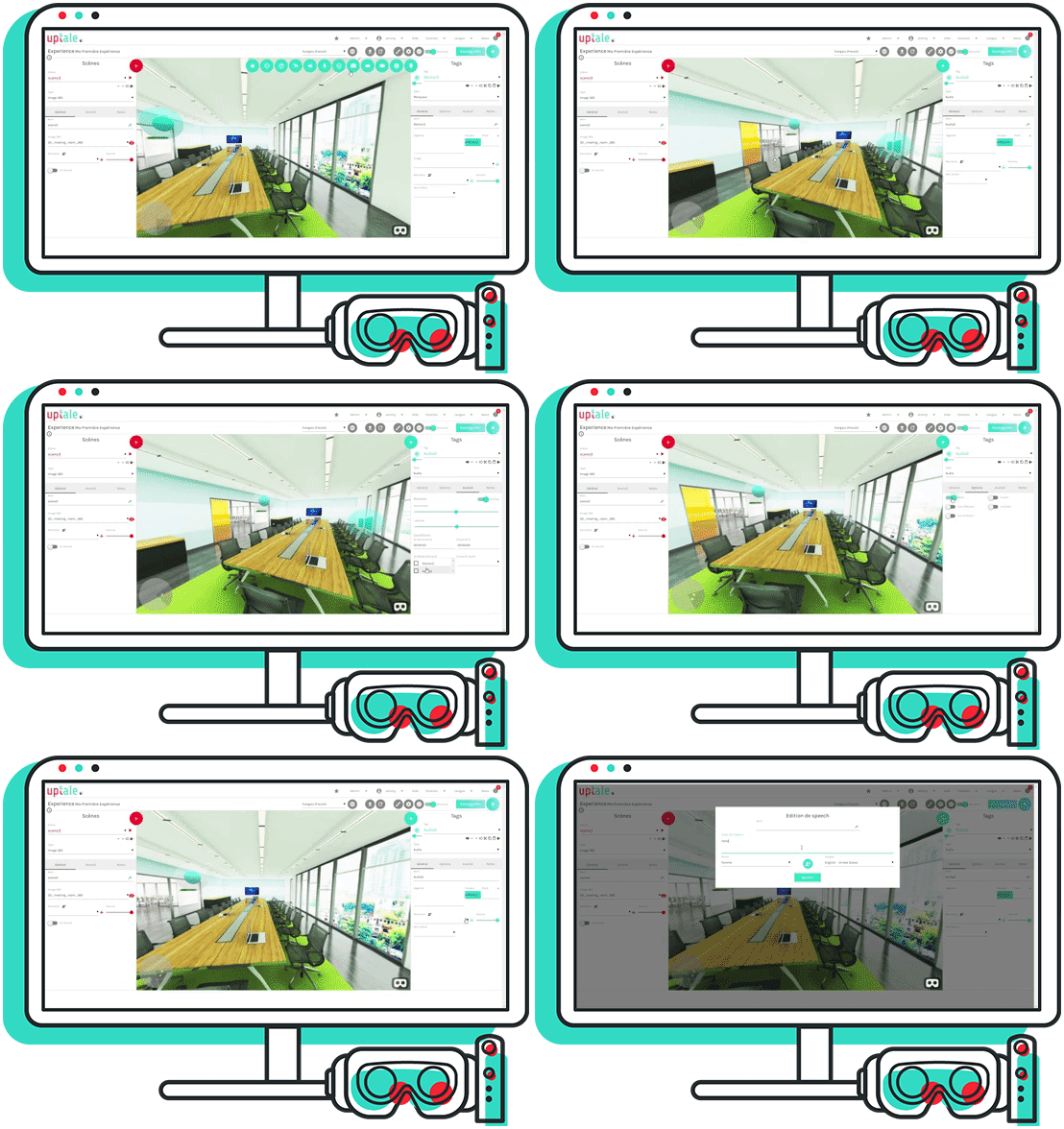
Designing user experiences for VR was a new domain for me. To get up to speed, I was given a month-long training with Uptale, learning the platform, immersive interactions, and best practices for VR-based learning experiences.




"It was a pleasure working with Souvik on multiple Virtual Reality projects. He consistently delivered high-quality work on time and was always a reliable and pleasant person to work with. I highly recommend Souvik for his professionalism and dedication. His ability to meet deadlines and exceed expectations makes him an outstanding asset to any team."
Aurélie Truchet
Co-founder & Chief Customer Officer, Uptale XR